


Japanese dragon meaning, and how it differs from a Chinese dragon
Why Japan's dragons are gods of water, what the number of claws really tells you, and the stories behind the dragon, the tiger and the carp.
Shop the story: Dragon bomber jackets · Dragon hoodies
In Japan, the dragon (ryū or tatsu, 竜 or 龍) is above all a god of water. It brings rain, rules the seas, rivers and lakes, and stands for power, protection and good fortune. Japanese dragons grew out of Chinese ones, so the two look alike. The usual way to tell them apart is the claws: Japanese dragons are most often drawn with three, while the dragons of China's emperors have five.


What does the dragon mean in Japan?
Forget the fire-breathing dragon of European stories. Japan's dragons are long, wingless, snake-like creatures, and most of them are gods of water. That one fact explains most of what they stand for.
- Water and rain. A dragon brings rain and rules the sea, rivers and lakes. Shinto has a whole tradition of dragon worship, ryūjin shinkō, tied to farming rites, prayers for rain and good catches for fishermen.
- Protection. Dragons guard temples. Buddhism brought the idea of dragons as protectors of the faith, and huge dragons are painted on the ceilings of Zen temple halls, such as Tenryū-ji in Kyoto.
- Rising up and success. In the old legend, a carp that leaps a waterfall turns into a dragon. In Japanese, a big chance in your career is still called tōryūmon, the "dragon gate". More on that below.
- Power and good fortune. A dragon is the strongest of creatures, and in East Asia it is a good sign, not a monster to fear.
The word itself shows how deep the dragon runs in the language. A tornado in Japanese is tatsumaki: tatsu, dragon, plus maki, a whirl.

Japanese vs Chinese dragons: what is the difference?
Less than most people think. Japan's dragon art came from China, and in many paintings the two are hard to tell apart. These are the differences that do hold up.
| Japanese dragon | Chinese dragon | |
|---|---|---|
| Name | Ryū or tatsu (竜, 龍) | Lóng (龍) |
| Claws | Most often three | Three in early art; later four, and five for the emperor |
| Above all | A god of water: sea, rivers, rain | Water and weather, and the emperor's own symbol |
| Roots | Native snake and water gods, Chinese dragons and India's nāga, mixed together | The oldest source of East Asian dragon art |
| Its jewel | The tide jewels of the sea god, which raise and lower the sea | The flaming pearl it carries or chases |
| Wings | None | Usually none: it flies without them |
The story of the claws
Most often three claws
Five claws
A story often told in Japan goes like this: the dragon was born in Japan and grew claws as it travelled. By the time it reached Korea it had four, and in China it had five. That is why, the story says, Japan's dragons have three.
History runs the other way. Early Chinese dragons mostly had three claws; they were the usual dragon on robes in the Tang dynasty (618 to 907), and that three-clawed dragon is the one that reached Japan. China moved on. From the Yuan dynasty (1271 to 1368), the five-clawed dragon was reserved for the emperor, and four claws were for princes and nobles. The Ming and Qing emperors kept that rule. Korea and Mongolia settled on four. Japan kept three.
So the claws are a good first clue, not proof. Chinese art has dragons with anything from two to five claws, and the two styles share so much that a single dragon is often hard to place.
Where Japanese dragons come from
Japan's dragons are a mix of three traditions. The first is its own. Before Buddhism arrived, Japan had great snakes and water spirits, and its oldest written histories, the Kojiki and the Nihon Shoki, finished in the early 700s, are full of them. The second is the Chinese dragon, which gave Japan its look and the word ryū. The third came with Buddhism: the nāga, the serpent kings of India, who protect the Buddha's teaching. Over time all three blended into the dragon you see on a temple ceiling or across the back of a jacket.
Famous dragons of Japan
- Ryūjin, the dragon god of the sea. He lives in Ryūgū-jō, a palace under the sea, and keeps the tide jewels that make the sea rise and fall. In the folk tale of Urashima Tarō, a fisherman saves a turtle and is carried to his palace.
- Yamata no Orochi, the eight-headed serpent. In the Kojiki, the god Susanoo kills this eight-headed, eight-tailed monster and finds a sword in one of its tails: Kusanagi, one of the three treasures of Japan's emperors.
- Seiryū, the Azure Dragon of the East. One of four guardian animals that came from China, each watching over one direction. Seiryū guards the east and stands for spring. More below.
- Kuzuryū, the nine-headed dragon. Worshipped at Togakushi Shrine in Nagano Prefecture.
- The Cloud Dragon of Tenryū-ji. Painted in 1997 by Kayama Matazō on the ceiling of the lecture hall at Tenryū-ji, a Zen temple in Kyoto whose name means "Heavenly Dragon". It is painted so that its eyes seem to follow you wherever you stand in the hall.
The dragon and the tiger
In Japanese art the dragon's great partner is the tiger. The pair comes from Chinese thought, and it reached Japan with Zen Buddhism. The dragon rules the sky: it stirs up clouds, rain and waves. The tiger rules the earth: its roar was said to make the wind. Together they stand for the two forces that balance the world, yang and yin. In a pair of screens painted around 1560, now at the Minneapolis Institute of Art, the two face each other evenly matched: neither one wins.
Japan had no tigers of its own, so its painters learned the animal from Chinese paintings. In Japanese art the tiger stands for strength, the quiet, steady kind, as the match for the dragon's restless energy.
Four guardians on one jacket
The dragon and tiger are also two of the four guardian animals: the Azure Dragon of the east, the White Tiger of the west, the Vermilion Bird of the south (often drawn as a phoenix) and the Black Tortoise of the north, a tortoise wrapped in a snake. All four are painted on the walls of the Kitora Tomb in Asuka, Nara Prefecture, from around the year 700, each on the wall that faces its direction.


The carp that became a dragon
An old Chinese legend says that carp swim up the Yellow River to a great waterfall, the Dragon Gate. Most give up. The few that leap it become dragons. In China the story stood for passing the hard exams for government office. In Japan the same idea lives on in two places. One is the word tōryūmon, "climbing the dragon gate", which means the big break that starts a career. The other is the carp streamers, koinobori, flown for Children's Day on May 5, in the hope that children grow up strong.


Dragon pieces at RUEMOOD
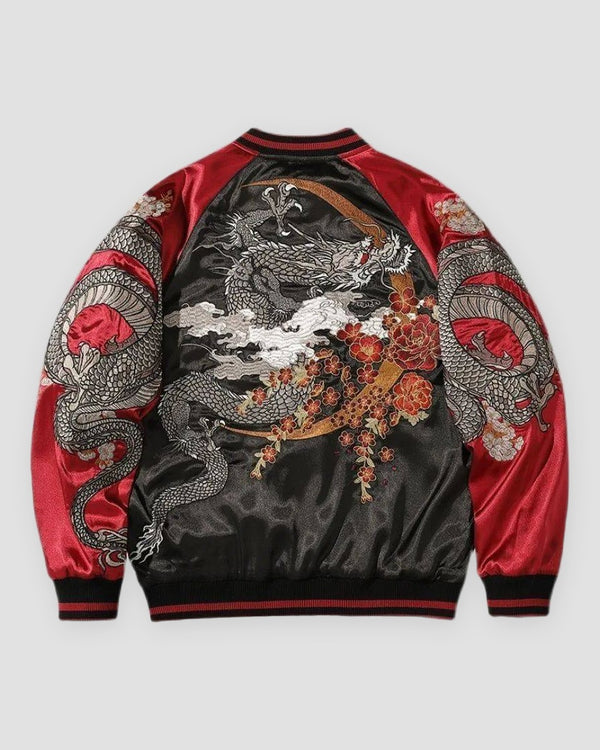
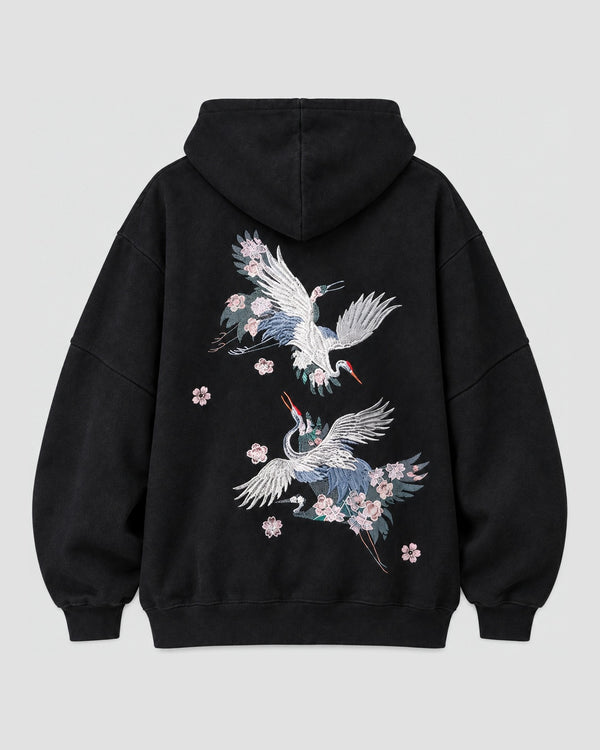
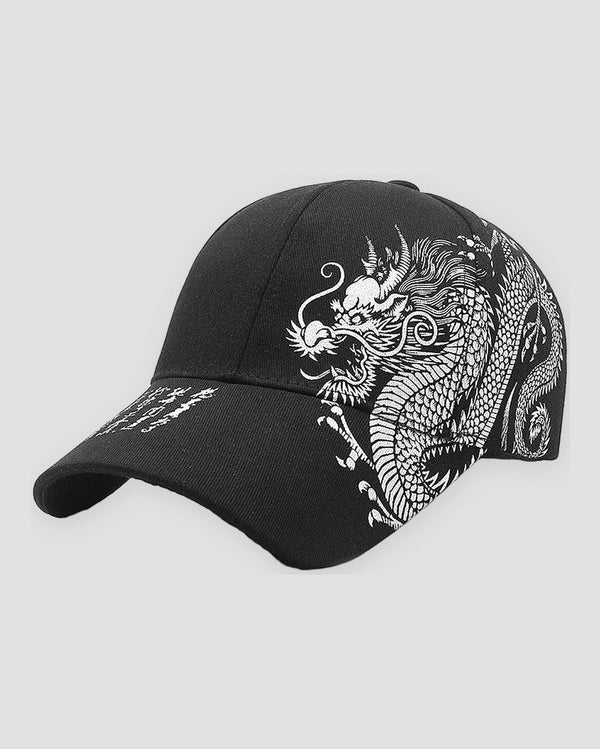
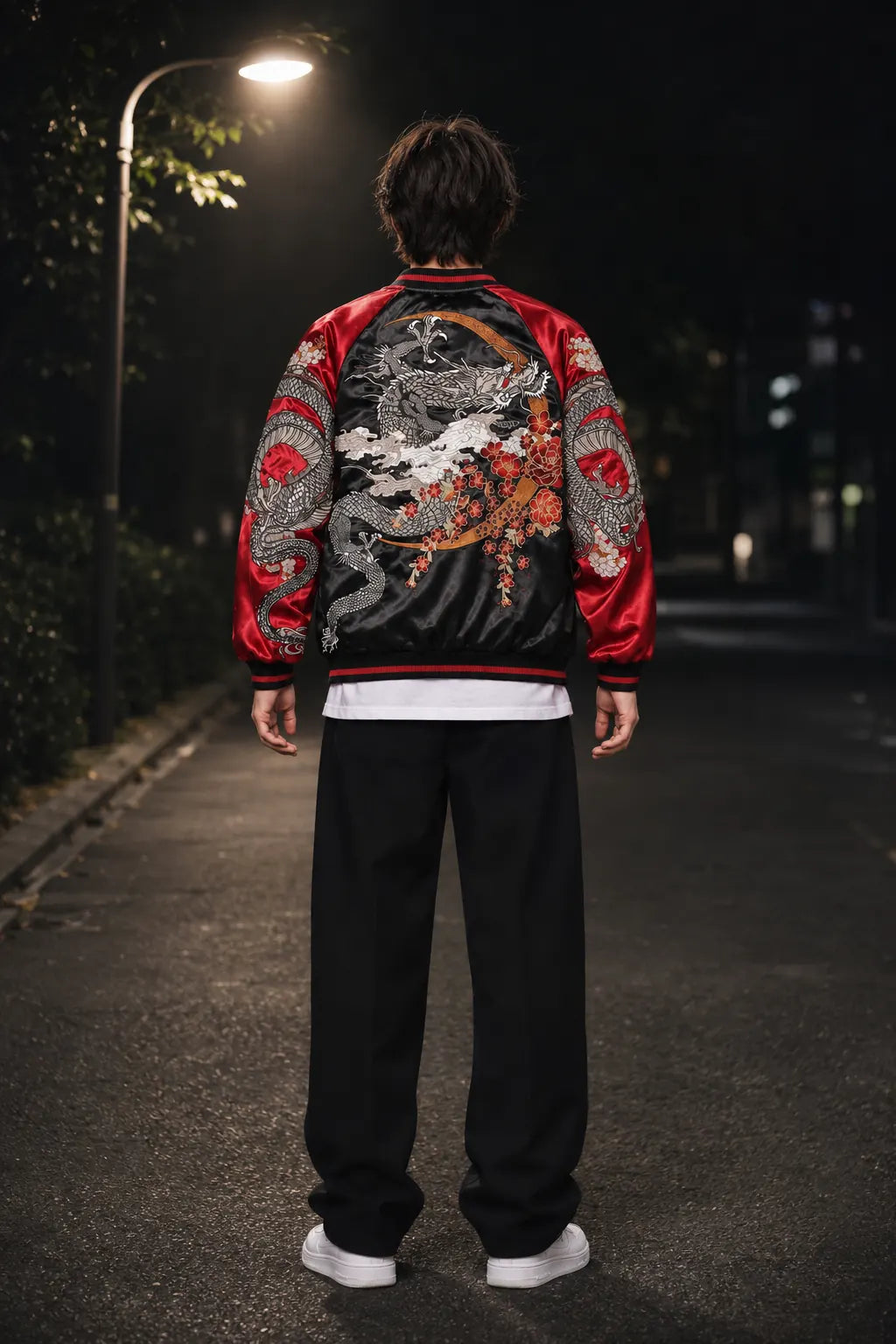
Dragons are the motif we carry most: on embroidered bomber and souvenir jackets, hoodies, sweatshirts, haori, joggers and caps. The jackets carry the most detail, stitched in silver, gold and colored thread.
 Dragon Embroidered Bomber Jacket with Peonies$119.00 USD
 Embroidered Tiger and Dragon Bomber Jacket$359.00 USD
 Dragon Sleeve Hoodie with Teal and Gold Embroidery$79.00 USD
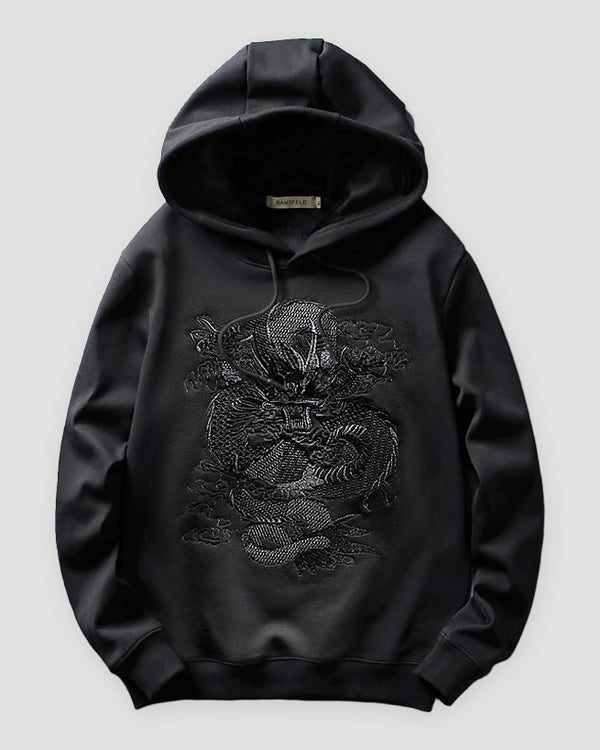 Tone-on-Tone Dragon Embroidered Hoodie$75.00 USD
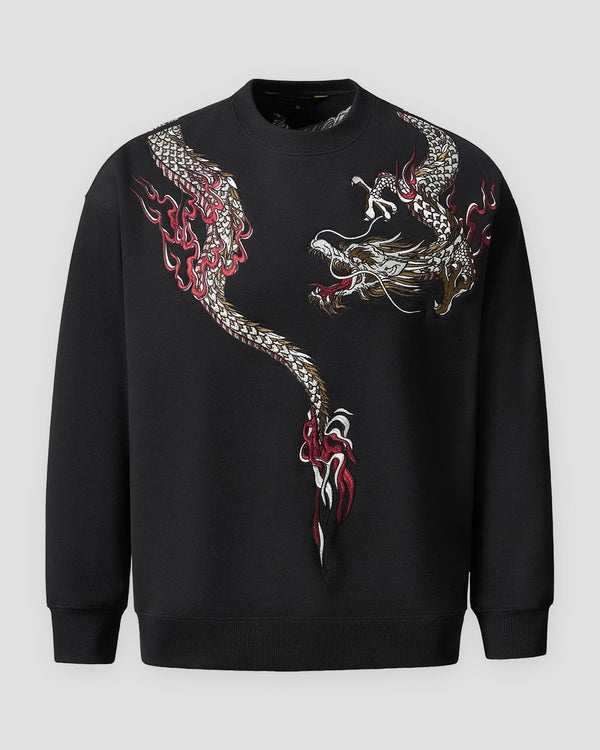 Dragon Embroidered Crewneck Sweatshirt with Fleece Lining$89.00 USD
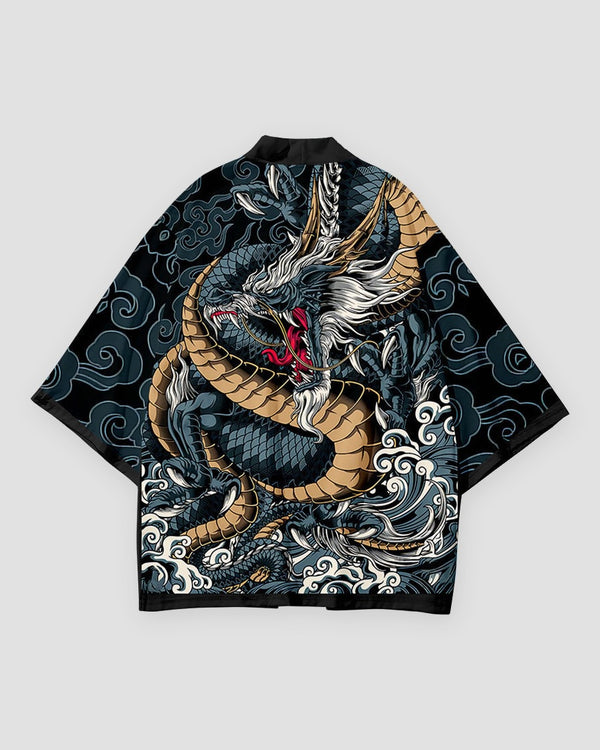
 Dragon Haori with Full-Back Scaled Dragon Print$45.00 USD
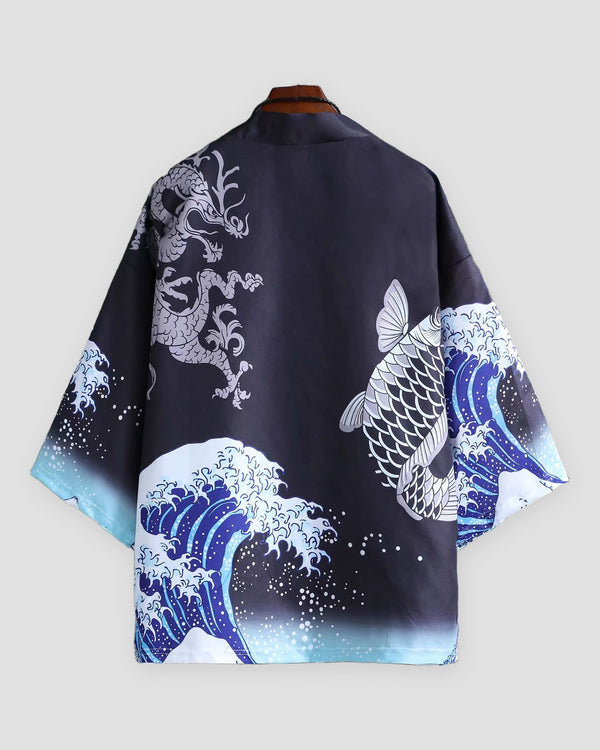
 Great Wave Haori with Dragon and Carp Print$49.00 USD
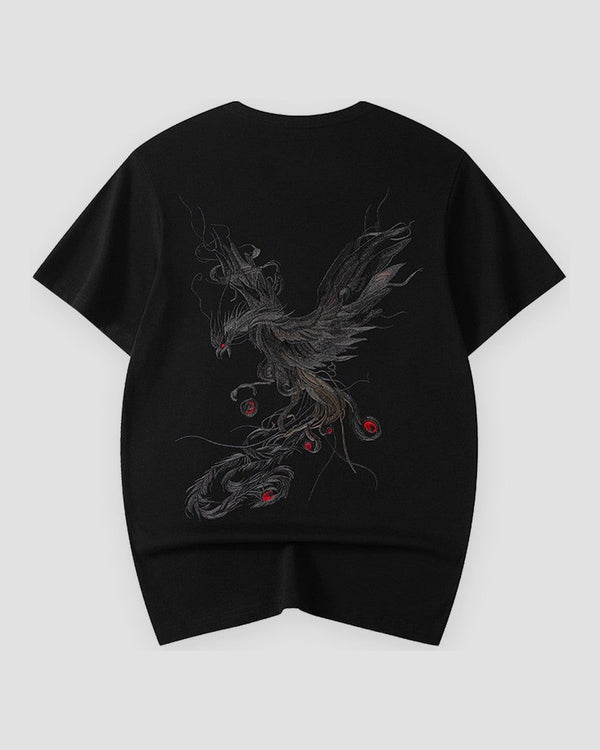
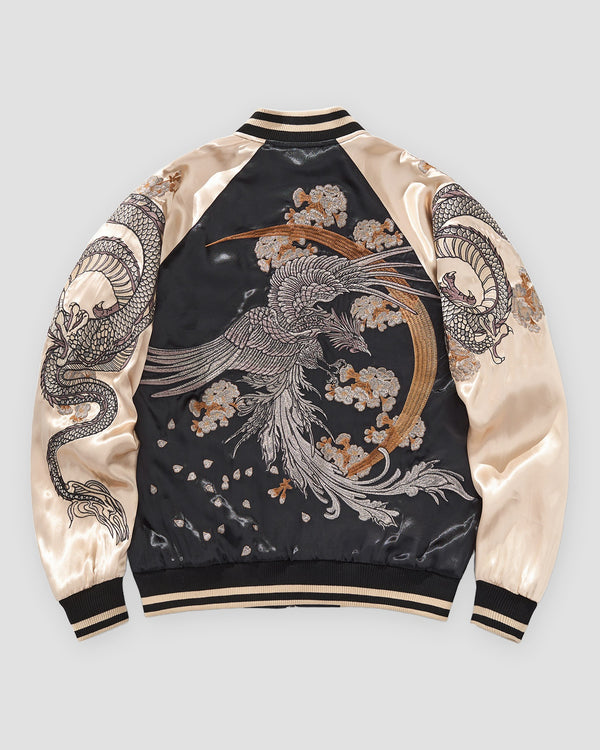 Phoenix Sukajan Jacket with Dragon Sleeves$249.00 USD
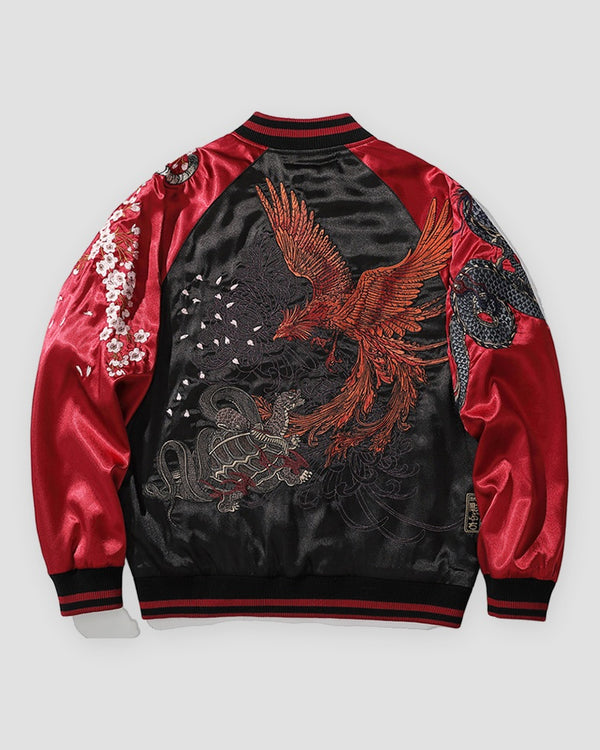 Tiger and Dragon Sukajan Jacket with Phoenix Back$205.00 USD
Questions people ask

What does a Japanese dragon symbolize?
Water above all: rain, the sea, rivers and lakes. From there it stands for protection, power, good fortune and rising to success.
How many claws does a Japanese dragon have?
Most often three. Treat it as a habit of Japanese art rather than a strict rule.
What is a Japanese dragon called?
Ryū or tatsu. It is written 竜, or in the older form 龍.
What powers do Japanese dragons have?
In the old stories they bring rain and rule the water. The sea god Ryūjin keeps jewels that raise and lower the tides, and he can take human form. And they fly, without wings.
Are Chinese and Japanese dragons the same?
Close cousins. Japan's dragon art came from China and blended with Japan's own water gods and serpents. The quickest visible difference is the claws: three is usual in Japan, five on the emperor's dragons in China.
Do dragons come from China or Japan?
From China, as far as art history can tell. A popular story in Japan says the opposite: that the dragon was born in Japan and gained claws as it travelled to China.
Do Japanese dragons have wings?
No. Japanese dragons are long and snake-like, with four legs and no wings. They fly anyway.
Is a dragon a good sign?
Yes. In Japan and China the dragon is a lucky and protective sign, unlike the dragon of European legends, which is usually the villain.
Read next
 What is a haori? Meaning, history and haori vs kimono

Sources
- Wikipedia, Japanese dragon (water gods, the three traditions, the claw story, Ryūjin, Yamata no Orochi, Kuzuryū, ryūjin shinkō) and Chinese dragon (claw rules by dynasty, the flaming pearl, wings).
- Minneapolis Institute of Art, Japanese Tiger and Dragon (yin and yang; no tigers in Japan).
- Tenryū-ji, The Tenryū-ji Cloud Dragon Painting.
- Wikipedia, Azure Dragon, Kitora Tomb, Dragon Gate and Koinobori.
- Wiktionary, 竜巻 and 登竜門.
- Connecticut College, The Japanese Dragon in Art and Mythology (the tide jewels; after M. W. de Visser, The Dragon in China and Japan, 1913).